

Spanish Authorities Catch Go-Fast Boat Carrying Three Tonnes of Cocaine
Courtesy Guardia Civil
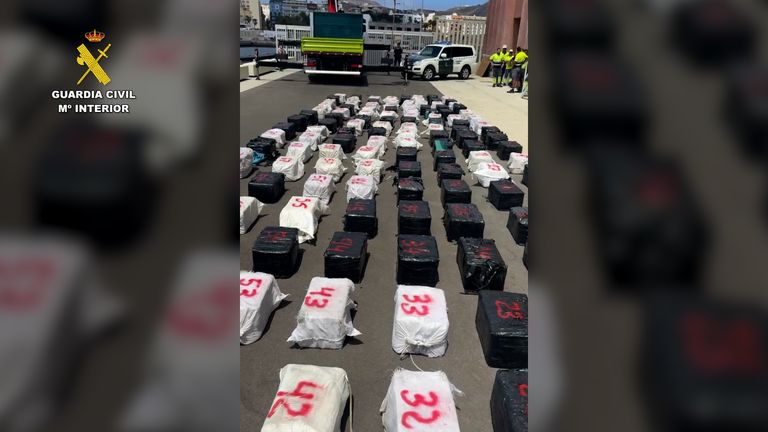
Spanish authorities have seized more than three tonnes of cocaine in Gran Canaria after an unprecedented chase of a "narco-boat." This is the latest interception in the Canary Islands, which have become a primary gateway for South American cocaine traffickers targeting the European market.
Spain’s Guardia Civil said that officers seized a total of 3,360 kilograms of cocaine in 139 packages in the south of Gran Canaria after intercepting a rigid inflatable boat (RIB). The go-fast boat, which was equipped with multiple high-powered engines, was operating about 70 miles south of the Canary Islands when it was spotted. Officers from the Maritime Service proceeded to intercept the boat, which quickly fled. Despite the suspect vessel's evasive maneuvers, they caught up with it and captured the operators.
The interception of the high-powered RIB boat - a vessel class that Spanish traffickers prefer for retrieving drugs from mother ships on the high seas - led to the cocaine seizure and arrest of five crew members. The suspects were armed with an assault rifle and a light machine gun, ostensibly to prevent assaults by other criminal groups.
“The five face crimes against public health for drug trafficking, serious disobedience, illegal possession of weapons and membership of a criminal organization,” said the Civil Guard in a statement.
The Gran Canaria seizure is the latest in a series of high value cocaine busts off the Canary Islands. Authorities say that this region has become part of a wider “cocaine highway” that Latin American criminal networks use to move drugs into Europe. These logistics networks depend on complex at-sea transfers designed to avoid major European seaports and escape detection.
In May, the Spanish police executed one of the largest maritime drug busts in recent history after intercepting a cargo ship near the Canary Islands. It was loaded with 45 tonnes of cocaine valued at over $812 million. The cargo was intended to be offloaded onto speedboats before reaching mainland Spain.
A month later, the Spanish National Police dismantled a major criminal network with the arrest of 48 people believed to be responsible for receiving and distributing cocaine shipments originating in Colombia and Brazil. The network is said to have been operating with 11 high-speed boats for drug pickups at sea. Authorities also seized 3.8 tonnes of cocaine, 69 vehicles, 19 boats and jet skis as well as properties, bank accounts, firearms and other equipment linked to maritime drug trafficking.
Theo Báo Maritime ExecutiveBài viết liên quan
Tin tức khác

Haaland chạm mốc 300 bàn cấp CLB
AnhErling Haaland ghi bàn thứ 300 ở cấp CLB, với pha lập công duy nhất giúp Man City thắng Coventry City 1-0 ở vòng ba Ngoại hạng Anh.

AI thay đổi ngành phim ngắn Trung Quốc
Từ chỗ hỗ trợ vài công đoạn, AI ngày càng tham gia sâu, thay thế vai trò của diễn viên và êkíp lĩnh vực phim ảnh Trung Quốc.

Gánh nặng 630.000 lao động của Volkswagen
Từng là biểu tượng sức mạnh công nghiệp Đức, Volkswagen giờ chật vật tinh gọn 630.000 lao động để giữ lợi nhuận trước sức ép từ xe Trung Quốc.

Chi phí du học Mỹ vượt 100.000 USD/năm ở 15 trường
15 đại học Mỹ công bố chi phí trên 100.000 USD với tân sinh viên, gồm học phí, lệ phí, ăn ở..., đứng đầu là Harvey Mudd.

Quan hệ sau kỳ kinh bao lâu thì 'an toàn'?
Nhiều phụ nữ nghĩ vừa hết kinh là thời điểm an toàn để quan hệ, nhưng bác sĩ cảnh báo vẫn có thể mang thai nếu rụng trứng sớm hoặc chu kỳ thay đổi.
